
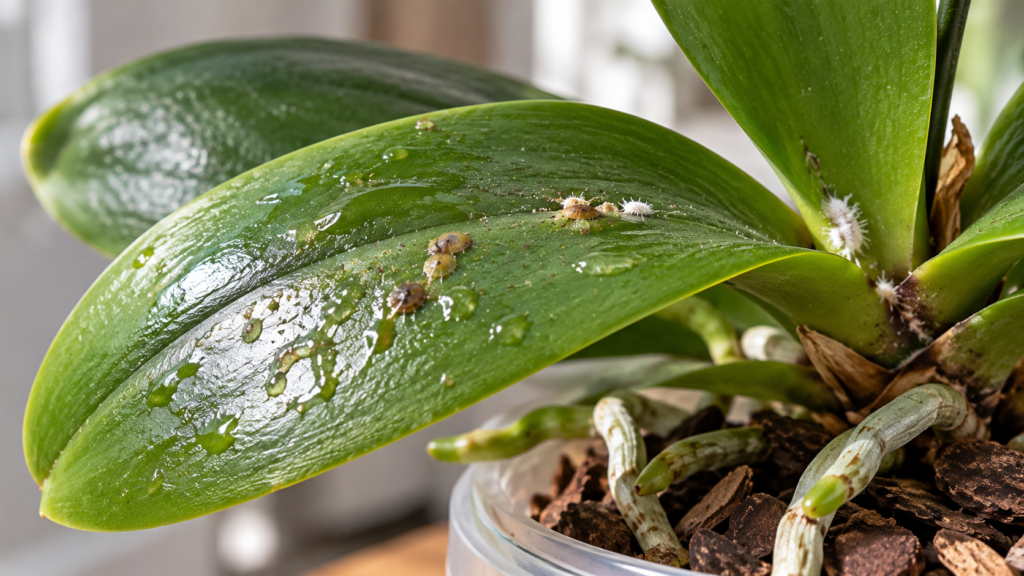
Have you noticed that your orchid leaves feel sticky, look unusually shiny, or have a clear, sugary residue on their surface? Although some orchids naturally produce sticky secretions, unexplained residue can also be a warning sign of insect pests.
One of the most common causes is honeydew, a sugary substance released by sap-feeding insects such as scale insects, mealybugs, and aphids. The residue can collect on leaves, stems, flower spikes, and nearby surfaces.
The key is to identify where the residue comes from before treating the plant.
In this guide, you will learn how to identify common causes of sticky orchid leaves, recognize hidden pests, clean the residue safely, and prevent the problem from returning.
What Causes Sticky Orchid Leaves?
Sticky orchid leaves usually have one of several causes:
- Honeydew produced by sap-feeding insects.
- Natural sticky secretions from certain orchids.
- Residue left by sprays or other substances.
- Sooty mold growing on honeydew deposits.
Honeydew is particularly important because it can indicate an active pest infestation even when the insects are difficult to see.
Start by inspecting both sides of the leaves, the leaf bases, the crown, and the flower spikes. Look for small insects, attached bumps, cotton-like material, or black surface growth.
If you notice other symptoms, such as yellowing or dark lesions, compare them with our guide to common orchid leaf problems.
1. Soft Scale Insects: A Common Cause of Sticky Leaves
Scale insects are small pests that attach themselves to plant surfaces and feed on sap. Depending on the species, they may appear as tiny brown, tan, gray, or yellowish bumps.
Soft scale insects release honeydew, which can make orchid foliage unusually shiny and sticky.
Signs of scale insects
Look for:
- Small, rounded bumps attached to leaves or stems.
- Brown or tan insects along leaf veins.
- Sticky residue beneath affected areas.
- Yellowing or weakened foliage.
- Black, soot-like growth on the leaves.
Scale insects can be difficult to recognize because they may resemble natural plant growth or small blemishes. Inspect the undersides of leaves, the midrib, leaf bases, and flower spikes.
How to treat scale insects
First, isolate the affected orchid from nearby plants.
For a small infestation, carefully remove visible insects with an appropriate tool or cotton swab. If you use alcohol or another cleaning product, test a small area first because some products can damage sensitive orchid tissue.
For larger infestations, consider a horticultural oil or insecticidal soap specifically labeled for the pest and suitable for orchids. Follow the product instructions and check for any restrictions regarding temperature, light exposure, and application frequency.
Continue inspecting the plant because insects may remain hidden after the initial treatment.
For further guidance, consult the University of Florida’s orchid insect and mite pest guide.
2. Mealybugs: Sticky Leaves With White Cotton-Like Patches
Mealybugs are small, sap-feeding insects that often appear as white, cottony masses. They tend to hide in protected areas, making them easy to overlook during routine watering.
Like soft scale insects, mealybugs produce honeydew that can accumulate on orchid leaves and nearby surfaces.
Where to look for mealybugs
Inspect these areas carefully:
- The junctions between leaves and the stem.
- The undersides of leaves.
- New leaves and flower spikes.
- Folds around the crown.
- Roots and potting medium if the infestation persists.
Mealybugs can weaken an orchid over time. Their honeydew may also encourage sooty mold to develop on the foliage.
How to treat mealybugs
Isolate the plant and carefully remove visible insects.
For a small infestation, a cotton swab with an appropriate treatment may help remove individual pests. If using isopropyl alcohol, test a small area first and avoid unnecessary contact with roots, the crown, or sensitive new growth.
For a persistent infestation, use a product labeled for mealybugs and suitable for orchids. Follow the label instructions and repeat applications only as directed.
Inspect nearby plants as well, because mealybugs can spread between plants and hide in difficult-to-reach places.
See the American Orchid Society’s guide to mealybugs for more information.
3. Aphids: Sticky Residue on New Growth and Flower Spikes
Aphids are small, soft-bodied insects that often gather on tender growth, flower spikes, buds, and the undersides of leaves.
They feed on plant sap and release honeydew, which can make orchid foliage sticky.
Signs of aphids
- Small clusters of insects on new growth.
- Sticky leaves or flower stems.
- Curled or distorted young leaves.
- Weak or stunted growth.
- Ants visiting the plant to feed on honeydew.
Aphids can multiply quickly under favorable conditions, so it is best to investigate an infestation as soon as you notice the first signs.
How to control aphids
Move the orchid away from other plants while you investigate.
For a light infestation, carefully wash the insects away with water, avoiding water accumulation in the crown. Remove any remaining visible pests where practical.
If the infestation continues, use an insecticidal soap or another product specifically labeled for the pest and suitable for orchids.
Inspect the plant again after treatment to check whether the insects have returned.
For additional identification and management advice, consult the American Orchid Society’s guide to aphids.
4. Is Sticky Residue Always Caused by Pests?
No. Sticky residue does not automatically mean that your orchid has an infestation.
Some orchids produce natural secretions, including around flower spikes or buds. Residue may also come from sprays, plant-care products, or other substances that have contacted the foliage.
The best way to distinguish these possibilities is to inspect the plant and observe whether the residue returns after cleaning.
Ask yourself:
- Can you see insects or small bumps attached to the leaves?
- Is the residue concentrated beneath a particular leaf or flower spike?
- Are ants visiting the plant?
- Is new growth becoming distorted or yellow?
- Does the residue return quickly after the leaves are cleaned?
If you find visible pests, treat the infestation rather than cleaning the leaves alone.
If no insects are present and the plant otherwise looks healthy, monitor the secretion before applying pesticides unnecessarily.
If sticky leaves also develop dark spots, use our guide to black spots on orchid leaves to distinguish removable surface residue from possible tissue damage.
5. Black Residue on Sticky Orchid Leaves
Sticky leaves sometimes develop a black or dark gray coating known as sooty mold.
This surface growth is associated with honeydew produced by sap-feeding insects. It is different from a dark lesion that develops within the leaf tissue.
A heavy coating can interfere with the amount of light reaching the leaf surface, although the underlying insect infestation is usually the more important problem to address.
Signs of sooty mold
- Black or dark gray material on the leaf surface.
- Sticky residue beneath or around the coating.
- Scale insects, mealybugs, or aphids nearby.
- Dark deposits on leaves or surfaces below the orchid.
How to remove it
First, identify and control the insects producing the honeydew.
Then gently wipe the leaf with a soft, damp cloth or rinse it carefully when appropriate for the plant. Avoid aggressive scrubbing, which can damage the leaf surface.
If the dark areas do not wipe away, or if the tissue underneath is soft, wet, or expanding, investigate other possible causes.
Our guide to black spots on orchid leaves explains how to assess dark patches and when they may indicate a more serious problem.
6. How to Clean Sticky Orchid Leaves Safely
Cleaning the residue improves the appearance of your orchid and makes it easier to inspect the foliage. However, cleaning alone will not solve the problem if pests remain.
Follow these steps:
- Isolate the orchid. Keep it separate from nearby plants if an infestation is suspected.
- Inspect the entire plant. Check leaf surfaces, the crown, leaf bases, flower spikes, and other protected areas.
- Remove visible pests. Use a suitable method that will not damage the plant.
- Clean the leaves gently. Use a soft cloth dampened with clean water where appropriate.
- Avoid trapped moisture. Keep water from accumulating in the crown and other crevices.
- Inspect again. Look for remaining insects and returning residue over the following days.
Avoid household detergents, abrasive cleaners, and untested mixtures. These can damage orchid foliage or create additional stress.
If you use alcohol, horticultural oil, insecticidal soap, or another treatment, verify that it is appropriate for your orchid and follow the product instructions.
7. How to Prevent Sticky Orchid Leaves From Returning
Long-term prevention depends on controlling the source of the residue, particularly when pests are responsible.
Inspect new orchids before introducing them
Examine new plants carefully before placing them near your existing collection. Look at the undersides of leaves, flower spikes, leaf bases, and the growing medium.
Keep new plants separate when practical while monitoring for pests.
Check your orchids regularly
Make pest inspection part of your normal care routine. Early infestations are often easier to manage than widespread ones.
Pay particular attention to tender new growth and protected areas where insects may hide.
Keep the growing area clean
Remove dead plant material and clean pots, trays, and nearby surfaces when necessary.
If an infestation occurs, inspect neighboring plants and clean surfaces where pests or honeydew may have accumulated.
Monitor after treatment
One treatment may not eliminate every insect or life stage. Continue checking the plant and repeat treatment only as directed by the product label.
Do not assume that the disappearance of sticky residue means the infestation has been completely eliminated.
Frequently Asked Questions
Why are my orchid leaves sticky when I cannot see any bugs?
Some pests are very small or hide beneath leaves, around the crown, and at leaf bases. Inspect the entire plant carefully. If no pests are found, consider natural secretions or residue from another source.
Should I wipe sticky orchid leaves with alcohol?
Alcohol can help remove certain pests, but it may damage sensitive plant tissue. Test a small area first and use it only when appropriate. For residue alone, gentle cleaning with water may be sufficient.
Can sticky orchid leaves recover?
Yes. If the leaves are otherwise healthy, they can continue functioning after the source of the residue is addressed. Damage caused by a heavy infestation may remain visible even after the pests are controlled.
Do ants mean my orchid has pests?
Ants may be attracted to honeydew produced by aphids, mealybugs, or soft scale insects. Their presence is a reason to inspect the orchid, although ants alone do not confirm an infestation.
Is black residue on orchid leaves dangerous?
A removable black coating may be sooty mold growing on honeydew. Control the insects responsible and clean the foliage gently. If the dark area is part of the leaf tissue or continues spreading, investigate other causes.
Final Thoughts
Sticky, shiny, or residue-covered orchid leaves are often associated with sap-feeding insects such as soft scale, mealybugs, and aphids. These pests release honeydew that accumulates on foliage and can support the growth of sooty mold.
Inspect the entire plant, isolate it if pests are suspected, remove visible insects carefully, and clean the leaves without damaging them. Continue monitoring after treatment because hidden insects can cause the residue to return.
Understanding the connection between leaf symptoms, pests, roots, and growing conditions helps you make better care decisions. For further guidance, explore our articles on common orchid leaf problems, black spots on orchid leaves, and orchid root rot.
Master Orchid Care With The Complete Orchid Care Library
Want to become more confident at identifying orchid problems and making better care decisions?
The Complete Orchid Care Library brings together practical orchid-care resources to help you understand symptoms, evaluate plant health, and make informed decisions throughout your growing journey.
Explore the library here: Get The Complete Orchid Care Library