
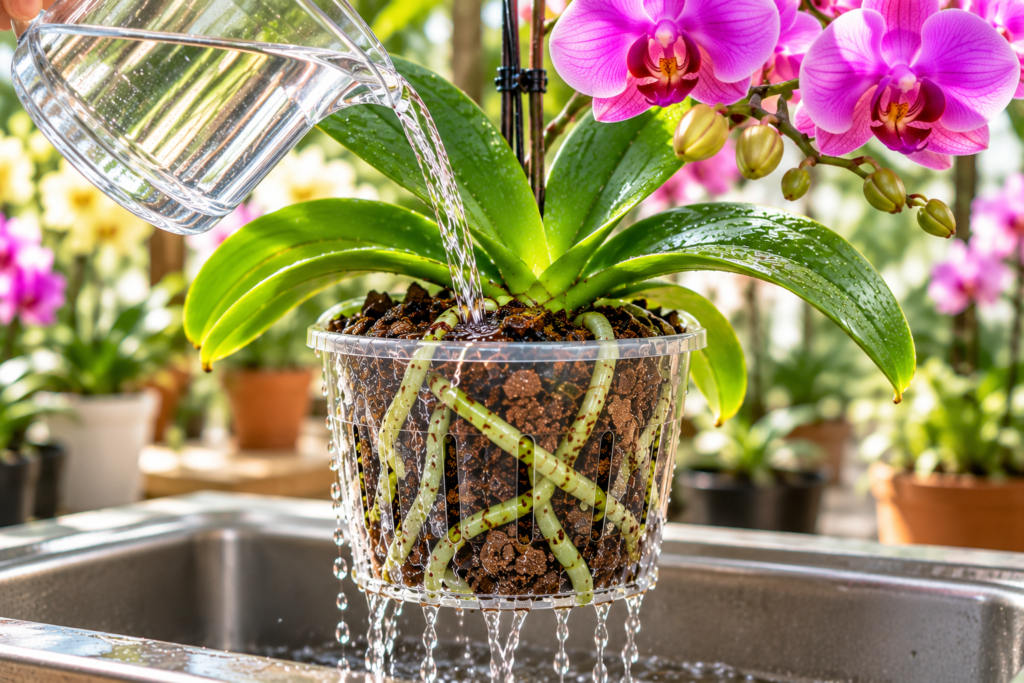
Watering is essential for healthy orchid growth, but keeping the roots too wet for too long can cause serious problems. When an orchid’s roots remain in a poorly aerated, waterlogged growing medium, they may begin to deteriorate. Damaged roots then struggle to absorb water, leaving the plant dehydrated even when the pot feels wet.
The solution is not to keep your orchid as dry as possible. Orchids need water, but their roots also need oxygen. Successful watering means providing enough moisture for healthy growth while allowing excess water to drain and the growing medium to dry appropriately between waterings.
In this guide, you will learn how to water orchids correctly, recognize conditions that increase the risk of root rot, and adjust your watering routine to protect the roots.
Why Does Overwatering Cause Orchid Root Rot?
Many popular indoor orchids, including Phalaenopsis, are epiphytes. In nature, they grow attached to trees, where their roots are exposed to air and receive moisture from rain and humidity.
Their roots are adapted to alternating periods of moisture and aeration. When the growing medium stays excessively wet, air spaces can become limited, reducing the oxygen available to the roots. Damaged roots may then lose their ability to absorb water and nutrients effectively.
Several factors can contribute to root rot:
- Watering again before the growing medium has dried sufficiently.
- Using compacted or decomposing potting medium.
- Growing an orchid in a pot that is too large for its root system.
- Poor drainage or water collecting in an outer container.
- Cool, humid conditions that slow drying.
- Reduced airflow around the pot and growing medium.
Overwatering is not determined by the amount of water used on a single occasion alone. A thorough watering followed by good drainage can be appropriate, while frequent watering in a medium that stays wet for too long can create problems.
For a broader overview, read The Complete Guide to Watering Orchids: When, How, and How Much.
1. Check Whether Your Orchid Actually Needs Water
The first step in preventing root rot is to avoid watering automatically according to a fixed schedule.
An orchid that needed water every seven days in one environment may take longer to dry in a cooler room or a pot filled with moisture-retentive moss. The same plant may dry faster during warm weather or when grown in coarse bark.
Before watering, check several indicators.
Inspect the roots
For many Phalaenopsis orchids growing in transparent pots, healthy hydrated roots often appear green, while dry roots commonly appear silvery or pale.
These color changes can help you judge moisture, but they are not universal across all orchid species.
Brown or black roots that are soft, mushy, hollow, or have outer tissue that slips off may be damaged. Do not assume that such roots simply need more water.
Check the growing medium
Look beyond the surface. The top of the bark may appear dry while the center of the pot remains damp.
Sphagnum moss can hold moisture longer than coarse bark, especially when tightly packed. If the medium is still wet, postpone watering when appropriate for the orchid’s type and growing conditions.
Lift the pot
A freshly watered pot usually feels heavier than one whose medium has dried. With practice, comparing pot weight becomes a useful way to estimate how much moisture remains.
Combine pot weight with root color and medium condition rather than relying on a single sign.
For more detailed indicators, see How to Tell When an Orchid Needs Water.
2. Water Thoroughly When Watering Is Needed
A common misconception is that orchids should receive only a small amount of water to protect their roots. In many bark-grown epiphytic orchids, a better approach is to wet the growing medium thoroughly and allow the excess to drain away.
When the orchid is ready for water:
- Use clean water at a moderate temperature.
- Pour it evenly over the growing medium.
- Wet the medium throughout rather than targeting only one small area.
- Allow excess water to flow freely through the drainage holes.
- Let the pot drain completely before returning it to an outer container.
Thorough watering helps hydrate the roots and can flush some accumulated fertilizer salts from the medium. It does not cause root rot simply because the pot becomes wet during watering.
The key is to avoid leaving the roots in persistently saturated conditions.
Do not direct water unnecessarily into the crown or between the leaves of a Phalaenopsis orchid. If water collects there, remove it gently, especially when airflow is limited.
3. Allow the Growing Medium to Dry Appropriately
Orchid roots generally need a balance of moisture and oxygen. For many commonly grown epiphytic orchids, the growing medium should approach dryness between waterings, but it should not be left dry for an excessive period.
The appropriate drying level depends on the orchid species, potting medium, temperature, humidity, and root condition.
Bark-based medium
Coarse orchid bark typically drains readily and allows good airflow. It often dries faster than dense moss, although pot size and environmental conditions still matter.
Sphagnum moss
Sphagnum moss can retain considerable moisture. If it is packed tightly, the center may remain wet long after the surface appears dry.
Water less frequently when the medium is retaining moisture, and consider whether the moss needs to be loosened or replaced if it stays wet for too long.
Decomposed medium
Old bark gradually breaks down. As the pieces become smaller, the medium may hold more water and allow less air to reach the roots.
If an orchid takes unusually long to dry, inspect the medium rather than continually adjusting the watering schedule around a deteriorating potting mix.
The goal is not to follow a universal number of dry days. Learn how the medium behaves in your growing conditions and adjust accordingly.
4. Use a Pot With Good Drainage and Suitable Airflow
A pot should allow excess water to escape easily. Drainage holes are important, but the overall setup also affects how quickly the root zone dries.
Transparent orchid pots can help you observe the roots and moisture inside the container. Slotted pots provide additional ventilation, while other suitable containers can work if their drainage and growing conditions are appropriate.
Choose a pot that fits the root system. An oversized pot may contain more wet medium than the roots can use efficiently, increasing the time required for drying.
After watering, check the following:
- Water can flow freely out of the pot.
- The pot is not standing in a pool of water.
- The growing medium is not tightly compacted.
- The container is suitable for the size and condition of the root system.
- Air can circulate around the pot.
Can orchids be overwatered even with drainage holes?
Yes. Drainage holes do not guarantee that a growing medium will dry quickly enough. Dense moss, decomposed bark, a very large pot, or cool and humid conditions can still keep the root zone wet for too long.
Read Can You Overwater an Orchid Even With Drainage Holes? for more information.
5. Adjust Watering to Temperature and Humidity
Watering frequency should reflect how quickly the orchid’s growing medium loses moisture.
In warm conditions, evaporation and plant water use may increase. In cool or humid conditions, the medium may remain damp for longer. Airflow, light levels, pot size, and the type of growing medium also influence drying.
During hot or dry weather:
- Check the pot more frequently.
- Observe whether the medium dries faster than usual.
- Water when the orchid needs it rather than assuming daily watering is necessary.
During cool or humid weather:
- Check the center of the medium before watering.
- Avoid repeating the same schedule if the pot is staying wet longer.
- Maintain suitable airflow without exposing the orchid to damaging drafts or temperature extremes.
Do not make decisions based on temperature alone. A small bark-filled pot and a large moss-filled pot may behave very differently in the same room.
For practical seasonal guidance, read How to Adjust Orchid Watering in Hot or Humid Weather.
6. Avoid Leaving Orchids Standing in Water
After watering, let the pot drain completely. If the orchid sits inside a decorative outer pot, remove it temporarily if necessary to ensure that excess water can escape.
Empty any water collected in a saucer or cachepot before returning the orchid to its usual position.
Leaving the bottom of the pot submerged can keep the lower medium saturated, particularly when the container has limited airflow or the growing medium retains a lot of moisture.
Soaking can be useful in some circumstances, such as when very dry bark is difficult to wet evenly. However, the orchid must drain completely afterward. Avoid sharing soaking water between plants, especially when pests or disease are suspected.
See Should You Soak Orchids or Water Them From the Top? for a comparison of both methods.
7. Recognize the Signs of Orchid Root Rot
Root rot can be difficult to diagnose from leaves alone because several orchid problems cause similar symptoms.
Possible warning signs include:
- Roots that are soft, mushy, brown, or black.
- Root coverings that slip off, leaving thin inner strands.
- A sour or unpleasant smell coming from the pot.
- Medium that stays wet for an unusually long time.
- Leaves that become limp or wrinkled despite a wet growing medium.
- Declining growth or a plant that becomes increasingly unstable in its pot.
Healthy Phalaenopsis roots are generally firm, whether green when wet or silvery when dry. A root’s color alone is not enough to diagnose rot.
If you suspect root damage, examine the root system and growing medium. Avoid adding more water simply because the leaves look dehydrated.
8. What to Do if Root Rot Has Already Started
If an orchid has clearly rotten roots, changing the watering schedule may not be enough. The damaged roots may no longer absorb water effectively.
Take a careful, step-by-step approach.
Remove the orchid for inspection if needed
If the medium remains saturated or root damage is suspected, gently remove the orchid from its pot and examine the roots.
Remove clearly rotten roots
Use a clean, sterilized cutting tool to remove roots that are unmistakably dead and mushy. Avoid cutting firm roots unnecessarily.
Replace unsuitable medium
If the medium has decomposed, smells unpleasant, or remains wet for too long, repot the orchid into a suitable fresh orchid medium and a pot that fits the remaining root system.
Restore appropriate growing conditions
Provide suitable light, temperature, airflow, and drainage. Avoid placing the orchid in standing water or allowing a severely compromised root system to remain saturated.
Adjust watering to the remaining roots
An orchid that has lost many roots may use less water because fewer functioning roots are available to absorb it. Monitor the new medium carefully and water according to the plant’s condition rather than following its former schedule.
For a complete recovery plan, read What to Do When Your Orchid Has Been Overwatered.
Common Watering Mistakes That Increase Root Rot Risk
Watering by calendar alone
A weekly reminder is useful for inspecting orchids, but it should not automatically trigger watering. Check the medium and roots first.
Giving frequent small splashes
Small amounts may wet only part of the root system. When watering is needed, thorough hydration followed by full drainage is often more effective.
Using the same routine for every orchid
Different species, potting media, and growing conditions have different moisture requirements.
Ignoring old potting medium
Decomposed bark and compacted moss can retain excessive moisture. Inspect the medium periodically and repot when necessary.
Leaving water in the outer pot
Standing water can keep the bottom of the growing medium saturated.
Trying to solve every leaf problem by watering more
Wrinkled or limp leaves can result from root damage, not just a lack of water. Inspect the roots before increasing watering frequency.
A Simple Routine to Protect Orchid Roots
Use this checklist whenever you are deciding whether to water:
- Inspect the roots. Look for firmness and moisture-related color changes.
- Check the medium. Assess moisture beyond the surface.
- Lift the pot. Compare its weight with how it feels after watering.
- Consider the environment. Account for temperature, humidity, airflow, and recent weather changes.
- Water when appropriate. Wet the medium thoroughly when the plant needs water.
- Drain completely. Empty any saucer or outer pot.
- Monitor the drying pattern. Adjust your next watering based on what you observe.
This routine helps prevent both excessive saturation and prolonged dehydration.
Frequently Asked Questions
Should I water orchids a little every day?
Usually, this is not a good default for potted epiphytic orchids. Frequent small amounts may keep the medium persistently wet or fail to hydrate it evenly. Check the plant and water thoroughly when it needs water.
Does root rot mean I should stop watering completely?
No. The goal is to restore a healthy balance of moisture and oxygen, not to leave the orchid dehydrated indefinitely. Damaged roots and unsuitable medium may need attention before a normal watering routine can resume.
Can root rot occur in bark?
Yes. Bark generally provides good drainage and airflow, but root rot can still occur if the medium remains too wet, has decomposed, or is used in conditions that slow drying.
How often should I water to avoid root rot?
There is no universal interval. Many indoor Phalaenopsis orchids are watered approximately every 7–10 days under some conditions, but this is only a starting point. Check the roots and growing medium to determine when your orchid needs water.
Are yellow leaves always a sign of overwatering?
No. Yellowing may result from natural leaf aging, root problems, light conditions, nutrient issues, or other causes. Inspect the plant as a whole before deciding on a remedy.
Final Thoughts
Preventing orchid root rot does not mean withholding water. It means watering at the right time, using a suitable growing medium, providing good drainage, and allowing the root zone to regain air between waterings.
Check the roots, learn how your potting medium dries, and adjust your routine as environmental conditions change. If an orchid looks dehydrated while its medium remains wet, investigate root health instead of automatically adding more water.
With consistent observation and a well-aerated growing setup, you can give your orchid the moisture it needs while reducing the risk of root rot.
Master Orchid Care With The Complete Orchid Care Library
Want to become more confident in watering orchids, identifying root problems, and making better care decisions? The Complete Orchid Care Library brings together practical orchid care ebooks and visual guides to help you understand common orchid problems and care for your plants with greater confidence.
Get The Complete Orchid Care Library Here.
Share this article