
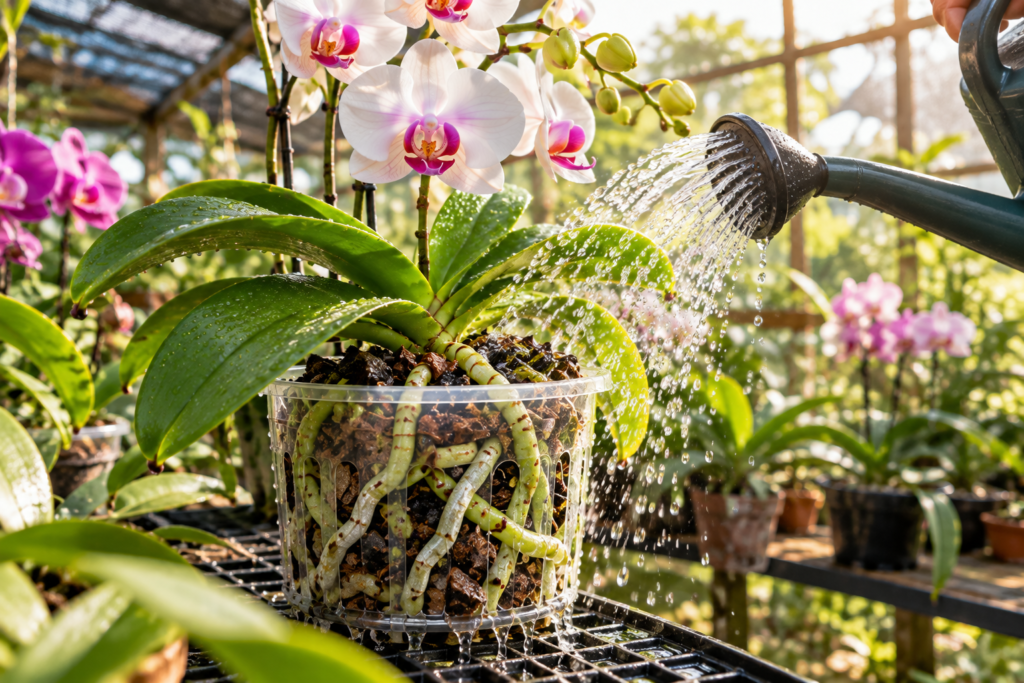
Orchid watering needs change with the weather. During hot periods, potting medium can dry quickly and roots may lose moisture faster. In humid conditions, however, water often evaporates more slowly, leaving the medium wet for longer. The best approach is to adjust watering according to temperature, humidity, airflow, pot type, and the condition of the growing medium rather than follow a rigid schedule.
Understanding these changes can help you prevent dehydration during hot weather and reduce the risk of root rot when humidity is high.
Why Weather Changes Orchid Watering Needs
Orchids do not use water at a constant rate throughout the year. Temperature, light, humidity, and air movement all influence how quickly a plant loses moisture and how fast its potting medium dries.
The American Orchid Society explains that higher temperatures can increase watering needs, while high humidity can reduce transpiration and keep the growing medium wet for longer. Inadequate airflow and low light can also slow drying. Read the American Orchid Society’s watering guidance.
This means that two orchids in the same room may not need water on the same day. A plant in a small, ventilated pot filled with coarse bark may dry much faster than one in a large plastic pot containing moisture-retentive moss.
How to Adjust Watering During Hot Weather
1. Check the Potting Medium More Frequently
High temperatures and strong light can speed up evaporation, especially in small pots, hanging baskets, and mounted orchids. During a heatwave, check your plants more often than usual.
Look for several signs before watering:
- The pot feels noticeably lighter.
- The growing medium is approaching dryness.
- Visible roots in a clear pot look silvery rather than green, where applicable.
- A wooden skewer inserted into the medium comes out nearly dry.
These signs are more useful than relying on a fixed number of days between waterings. Different orchid species and growing setups dry at different rates.
2. Water Thoroughly When the Plant Needs It
When the medium is ready for watering, apply enough water to wet the medium throughout and allow excess water to drain freely from the pot.
Avoid giving only a small splash every day simply because the weather is hot. Frequent light watering can leave parts of the root system inadequately hydrated, while repeatedly watering a medium that remains wet can deprive roots of the air they need.
For more detail, see our guide to how often you should water an orchid and our instructions on watering orchids without causing root rot.
3. Protect Orchids From Excessive Heat
More frequent watering is not a substitute for controlling excessive heat. If an orchid is exposed to intense midday sun or a hot window, move it to a suitable position with filtered light or temporary shade.
Keep air moving gently around the plants. In greenhouses and crowded growing areas, improved spacing and appropriate ventilation help moisture evaporate and reduce conditions that favor bacterial and fungal problems.
The American Orchid Society recommends combining appropriate watering with humidity management and continuous air movement during hot weather. See its heat-stress guidance.
4. Do Not Mist as a Substitute for Watering
Misting may briefly wet exposed roots or plant surfaces, but it does not replace thorough watering when the root zone is dry. Its effect on humidity is also temporary unless a suitable system maintains humidity over time.
Read more in our guide to whether misting orchids is helpful or harmful.
How to Adjust Watering During Humid Weather
1. Wait Longer if the Medium Is Still Wet
When humidity rises, water evaporates more slowly from the potting medium. If the roots and medium are still moist, postpone watering until the plant is ready.
Do not water simply because your usual watering day has arrived. Check the actual condition of the pot, especially after several rainy or overcast days.
2. Improve Airflow Around the Plant
Humid air combined with stagnant conditions can prolong wetness and increase the risk of root and crown problems. Space plants so air can circulate around their leaves and roots. If growing indoors or in a greenhouse, use gentle airflow where appropriate without directing a strong fan continuously at one plant.
Air movement does not mean the medium should dry out immediately. The goal is to avoid prolonged stagnant wetness while maintaining the moisture your orchid requires.
3. Check the Pot and Growing Medium
A large pot, dense medium, or tightly packed sphagnum moss can remain wet much longer than a smaller pot with a more open mix. If the medium repeatedly stays wet for too long, inspect its condition and the pot’s drainage rather than merely extending the interval between waterings.
Most common epiphytic orchids need a growing medium that holds some moisture while still allowing air to reach the roots. If the medium has broken down or drainage is poor, repotting may be necessary.
See our guide to overwatering orchids even when drainage holes are present and learn what to do when an orchid has been overwatered.
4. Keep Water From Sitting in the Crown
For orchids such as Phalaenopsis, avoid leaving water trapped in the central crown or between leaves, especially when conditions are cool, humid, or poorly ventilated. Water early enough in the day that splashed foliage and plant surfaces can dry before nightfall.
Hot and Humid Weather: A Practical Comparison
| Growing condition | What to check | Watering adjustment |
|---|---|---|
| Hot and dry | Pots become light quickly; medium dries fast | Check more often and water thoroughly when needed |
| Hot and humid | High heat but slower drying in dense or sheltered pots | Check each pot; do not assume heat alone means it needs water |
| Warm with good airflow | Medium may dry faster than in still air | Monitor more frequently |
| Cool, humid, or rainy | Medium may stay wet for longer | Delay watering until the plant and medium are ready |
| Mounted or basket-grown orchid | Roots are exposed and dry rapidly | Check frequently; some may need very frequent watering in hot weather |
These are general patterns, not a universal schedule. Species, potting medium, pot size, light levels, and growing environment can change the result.
Signs Your Watering Routine Needs Adjustment
Watch for patterns rather than relying on one symptom alone.
Possible dehydration
- The medium dries much faster than usual.
- Roots become dry and shriveled.
- Leaves or pseudobulbs lose firmness.
Possible prolonged wetness or root damage
- The medium remains wet for an unusually long time.
- Roots turn brown or black and become soft or mushy.
- Leaves become limp even though the medium is wet.
Wrinkled or limp leaves can result from either too little water or damaged roots that cannot absorb water effectively. Inspect the roots and medium before increasing watering. Our healthy orchid roots guide explains what healthy roots should look like.
A Simple Weather-Based Watering Routine
- Check the weather and growing conditions. Consider heat, humidity, rainfall, light, and airflow.
- Inspect each pot. Check medium moisture, pot weight, and visible roots where possible.
- Water when the orchid is ready. Wet the medium thoroughly and let excess water drain completely.
- Recheck during weather changes. A sudden heatwave or several humid, rainy days can change how quickly pots dry.
- Record what works. Note how long each type of pot and medium takes to approach dryness in your growing area.
A short record can help you recognize patterns without turning watering into a rigid calendar.
Frequently Asked Questions
Should I water orchids every day during hot weather?
Not necessarily. Some mounted orchids or plants in baskets may need daily watering during hot conditions, but many potted orchids do not. Check how quickly the medium dries and the needs of the particular orchid.
Should I water orchids less often when humidity is high?
Often, yes, if the medium is drying more slowly. However, humidity alone does not determine the schedule. Pot type, airflow, temperature, light, and the orchid species also matter.
Can high humidity cause orchid root rot?
High humidity by itself does not automatically cause root rot. The risk increases when the growing medium stays wet for too long, airflow is inadequate, or roots remain in poorly aerated conditions.
Is it better to water orchids in the morning?
Morning watering is a practical choice because it gives splashed leaves and plant surfaces time to dry before night. Always allow excess water to drain, and avoid leaving water trapped in the crown of a Phalaenopsis.
Should I increase humidity to help orchids during hot weather?
Suitable humidity can help many orchids cope with heat, but it should be balanced with air movement and appropriate watering. Avoid creating a stagnant, constantly wet environment.
Adjust to the Weather, Not Just the Calendar
Healthy orchid watering depends on balancing moisture with airflow and root health. Hot weather often means checking pots more frequently, while humid weather may mean waiting longer for the medium to dry. Neither condition calls for automatic daily watering or a fixed reduction in frequency.
Observe how your own orchids respond, make small adjustments as conditions change, and inspect roots whenever a plant looks dehydrated despite wet medium.
Master Orchid Care With The Complete Orchid Care Library
Want to become more confident in watering orchids, identifying root problems, and making better care decisions? The Complete Orchid Care Library brings together practical orchid care ebooks and visual guides to help you understand common orchid problems and care for your plants with greater confidence.
Get The Complete Orchid Care Library Here
Share this article