
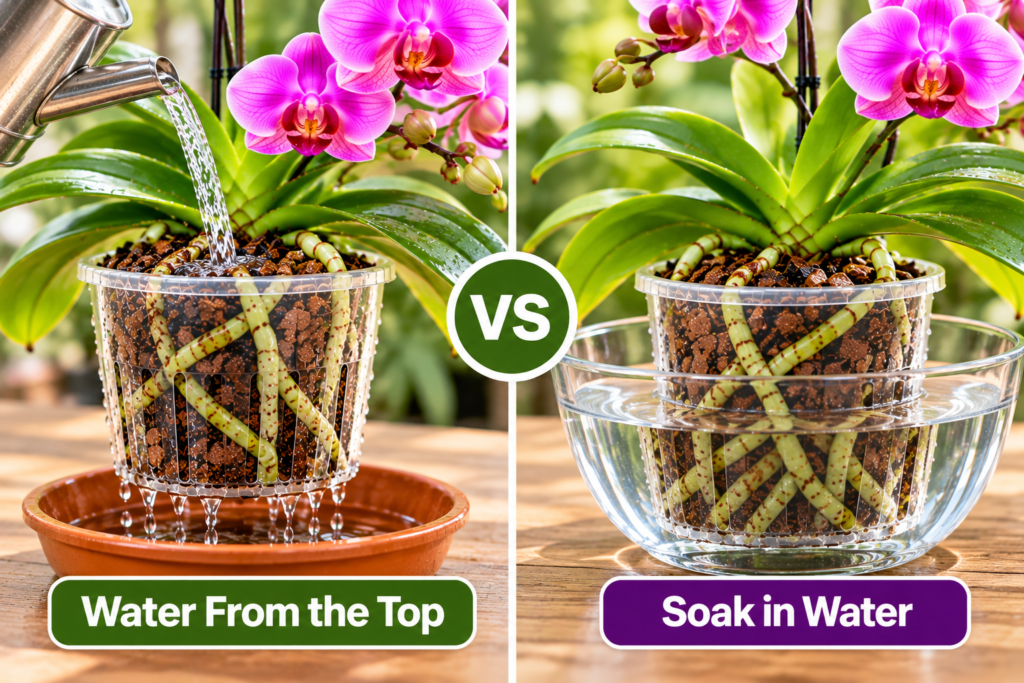
When watering orchids, two common methods are often recommended: pouring water over the potting medium from the top or soaking the pot in water for several minutes. Both methods can work well, but the best choice depends on the orchid, its growing medium, and how quickly the pot drains.
The most important thing is not whether you soak or top-water. It is whether the roots receive enough moisture without remaining wet for too long.
For most potted Phalaenopsis orchids, top watering is a simple, effective option. Soaking can also be useful, especially when the potting medium has become difficult to rewet. However, soaking requires careful attention to drainage and hygiene.
Is It Better to Soak Orchids or Water From the Top?
There is no single method that is best for every orchid. Both can thoroughly moisten the growing medium when done correctly.
Watering From the Top
Top watering means slowly pouring water over the potting medium until it flows freely from the drainage holes.
This method offers several advantages:
- It thoroughly wets the bark, moss, or other suitable medium.
- It helps flush away accumulated fertilizer salts and minerals.
- It allows excess water to drain naturally.
- It reduces the risk of spreading diseases when each plant is watered individually.
For many home growers, this is the easiest everyday method. Use water at room temperature, direct it toward the medium and roots, and avoid allowing water to collect in the crown of a Phalaenopsis orchid.
If the medium is very dry, water may run straight through before the bark or moss absorbs enough moisture. In that case, water slowly, pause briefly, and water again.
Soaking an Orchid
Soaking involves placing the orchid pot in a container of water for several minutes so the growing medium can absorb moisture.
This method can be helpful when:
- Bark has become very dry and initially repels water.
- The potting medium needs time to absorb moisture evenly.
- The orchid is growing in a medium that benefits from thorough hydration.
- You want to rehydrate a pot that has dried more than intended.
For a typical potted Phalaenopsis, a short soak of around 5–10 minutes can be sufficient, although the ideal time depends on the medium and pot. The goal is to moisten the medium, not to keep the roots submerged for extended periods.
After soaking, lift the pot and allow all excess water to drain before returning it to its decorative container or saucer.
How to Water an Orchid From the Top Correctly
Follow these steps when watering a potted orchid.
1. Check whether it needs water.
Do not water solely because a certain number of days has passed. Check the root color, pot weight, and moisture inside the medium. For a typical Phalaenopsis in a clear pot, roots that have turned silvery and a medium that is approaching dryness can indicate that watering is needed.
Learn more in How to Tell When an Orchid Needs Water.
2. Use a suitable water source.
Use clean water appropriate for your orchid. Many orchids tolerate suitable household tap water, while rainwater or other low-mineral sources may be useful in some situations.
3. Pour slowly over the medium.
Direct water across the bark or other potting medium so it becomes evenly wet. Avoid pouring water into the crown or leaving water trapped between the leaves.
4. Let the water drain completely.
Water should flow freely through the drainage holes. Do not leave the pot sitting in collected water.
5. Check the medium again before the next watering.
Allow the medium to approach the appropriate dryness for your orchid before watering again. The correct interval varies with the species, pot, medium, temperature, humidity, and airflow.
For more detail, read The Complete Guide to Watering Orchids: When, How, and How Much.
How to Soak an Orchid Safely
If you prefer soaking, use a clean container and follow a few precautions.
1. Choose a clean container.
Use a container that is free of soil, algae, and plant debris. If you grow several orchids, avoid using the same standing water for every plant. Shared water can spread pathogens between orchids.
2. Place the pot in the water.
Keep the water level below the pot’s rim so bark or moss does not float out. Allow water to enter through the drainage holes and wet the medium.
3. Soak briefly.
For many potted Phalaenopsis orchids, start with approximately 5–10 minutes. Some media absorb water faster than others, so observe how your particular pot behaves rather than treating this as a fixed rule.
4. Remove the pot and drain it thoroughly.
Let excess water escape through all drainage openings. Empty any saucer or outer pot before returning the orchid to its growing position.
5. Clean the container between plants.
Never assume that apparently clear water is free from plant pathogens. Use separate clean water for different orchids, particularly if any plant shows signs of disease.
The American Orchid Society explains that thorough watering and drainage are essential, and specifically warns against dunking mounted orchids or bare-root plants in shared buckets because of disease transmission risks. See its guidance on Watering: Techniques for Success.
Which Method Is Better for Different Potting Media?
Your potting medium affects how quickly water enters, how much it retains, and how long roots remain wet.
Orchids Grown in Bark
Coarse bark usually drains quickly and allows good airflow around roots. Top watering works well for most bark-grown Phalaenopsis orchids.
If very dry bark repels water, slow top watering or a brief soak can help it absorb moisture more evenly. Always check that water drains freely afterward.
Orchids Grown in Sphagnum Moss
Sphagnum moss can retain considerably more moisture than coarse bark. A short soak may not be necessary if the moss is already evenly moist.
Be especially careful not to water too frequently. Dense moss packed tightly around the roots can remain wet longer than expected, increasing the risk of root damage.
Orchids in Slotted or Net Pots
These containers provide excellent drainage and airflow, but the medium may dry relatively quickly. Top watering is usually practical, although the frequency of watering may need to increase depending on conditions.
Mounted or Bare-Root Orchids
Mounted orchids and orchids grown without potting medium are different from conventional potted orchids. Their exposed roots often dry rapidly and may need more frequent watering.
Avoid placing multiple mounted or bare-root orchids into a shared soaking bucket. Individual watering helps reduce the risk of transferring disease.
Can Soaking Orchids Cause Root Rot?
Yes, soaking can contribute to root rot if the orchid remains wet for too long, the medium retains excessive moisture, or the pot lacks adequate drainage.
However, soaking itself does not automatically cause root rot. Top watering can also lead to root problems when watering is too frequent or the medium stays wet for extended periods.
Orchid roots need both moisture and oxygen. When the growing medium remains saturated and airflow around the roots is insufficient, roots may deteriorate.
Watch for these warning signs:
- Roots that are brown or black and mushy.
- Potting medium that remains wet for unusually long periods.
- A sour or unpleasant smell from the medium.
- A plant that becomes dehydrated despite frequent watering.
Wrinkled leaves alone do not prove that an orchid needs more water. Root damage can prevent the plant from absorbing moisture even when the medium is wet. Inspect the roots before increasing watering frequency.
If you suspect a problem, read How to Water an Orchid Without Causing Root Rot and What to Do When Your Orchid Has Been Overwatered.
Common Orchid Watering Mistakes to Avoid
Regardless of the method you choose, avoid these common mistakes.
Leaving water in the outer pot. A decorative container can hide standing water around the bottom of the growing pot. Always empty it after watering.
Watering on a rigid schedule. A weekly schedule may work in one growing environment but be too frequent or too infrequent in another. Check the actual moisture level.
Using one soaking container for every orchid. This can transfer pathogens from an unhealthy plant to healthy ones.
Assuming drainage holes solve every problem. Drainage helps excess water escape, but dense or decomposed medium can still retain too much moisture.
Allowing roots to remain wet indefinitely. Roots need a suitable balance of water and air. Good drainage and appropriate drying between waterings are essential.
For a deeper explanation, see Can You Overwater an Orchid Even With Drainage Holes?.
Frequently Asked Questions
Should I soak my orchid every time I water it?
No. You can use top watering for routine care and soak occasionally when the medium is difficult to rewet. Choose the method that thoroughly wets the medium while allowing the roots to drain and dry appropriately.
How long should I soak a Phalaenopsis orchid?
A short soak of approximately 5–10 minutes is a reasonable starting point for many potted Phalaenopsis orchids. The ideal duration depends on the potting medium and how quickly it absorbs water. Always drain the pot completely afterward.
Is bottom watering good for orchids?
Bottom watering can moisten the medium through its drainage holes, but it may not flush accumulated salts from the medium as effectively as thorough top watering. If you use it, periodically water from the top to help flush the medium, and never leave the pot standing in water.
Should orchid roots be wet or dry after watering?
Roots should be thoroughly hydrated during watering, but they should not remain continuously saturated. Healthy roots vary in appearance according to the species and conditions. In many Phalaenopsis orchids, hydrated roots look green, while roots exposed to air often look silvery.
Can I soak several orchids in the same water?
It is best to avoid this. Shared water can spread pathogens between plants, even when no obvious symptoms are present. Use clean water for each orchid and clean the container regularly.
Final Thoughts
Both soaking and top watering can keep orchids healthy when used correctly. Top watering is usually the most practical everyday method because it thoroughly wets the medium and helps flush away accumulated salts. Soaking can be useful when dry medium resists water, provided the pot drains completely afterward.
Instead of focusing only on the watering technique, pay attention to root health, potting medium, drainage, and how quickly the plant dries in your growing conditions.
Master Orchid Care With The Complete Orchid Care Library
Want to become more confident in watering orchids, identifying root problems, and making better care decisions? The Complete Orchid Care Library brings together practical orchid care ebooks and visual guides to help you understand common orchid problems and care for your plants with greater confidence.
Get The Complete Orchid Care Library Here
Share this article