Overwatering is one of the most common causes of orchid root problems. When the potting medium stays wet for too long, orchid roots may begin to decay, reducing the plant’s ability to absorb water and nutrients. The result can be confusing: an orchid that has received too much water may develop wrinkled leaves and look dehydrated.
The good news is that an overwatered orchid can often recover if you identify the problem early and protect the remaining healthy roots.
The key is to determine whether the medium is simply too wet or whether the roots have already begun to rot. These situations require different responses.
1. Recognize the Signs of an Overwatered Orchid
One symptom alone cannot confirm overwatering. Look at the roots, potting medium, and leaves together.
Brown, Black, or Mushy Roots
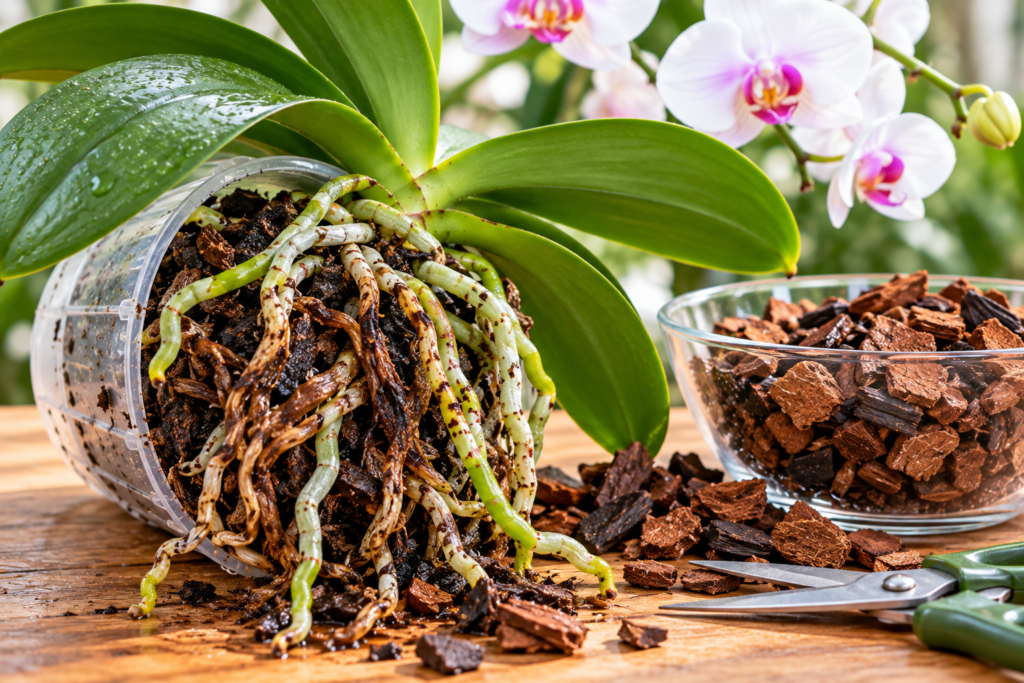
Healthy Phalaenopsis roots are generally firm and plump. When hydrated, many appear green; when dry, they often become silvery or gray.
Roots affected by rot may become brown or black, soft, mushy, hollow, or easily damaged. A few old or discolored roots do not automatically mean the entire root system is unhealthy, so check their texture as well as their color.
Yellowing Leaves
Yellow leaves can occur for many reasons, including natural aging, environmental stress, and root damage. If several leaves are yellowing while the medium remains wet and the roots are deteriorating, overwatering becomes a stronger possibility.
Wrinkled or Drooping Leaves
This is one of the most misleading symptoms. An orchid with damaged roots may struggle to absorb water even when the potting medium is saturated.
Adding more water without checking the roots can make the problem worse.
Potting Medium That Stays Wet
If the medium remains wet for an unusually long time, check whether it has become compacted or decomposed. Old bark and densely packed moss can retain excessive moisture and reduce airflow around roots.
For more help distinguishing symptoms, read How to Tell When an Orchid Needs Water.
2. Stop Watering and Inspect the Pot
If the medium is saturated, stop watering while you assess the plant.
Remove the orchid from its decorative outer pot if water has collected at the bottom. Empty the saucer and make sure the growing pot has open drainage holes.
Next, check the medium and roots.
- If the roots are firm and healthy, and the medium is simply wet, you may only need to improve drainage and allow the pot to approach the appropriate dryness.
- If the medium smells sour, has broken down, or remains saturated, repotting may be necessary.
- If many roots are mushy, hollow, or decayed, remove the plant from the pot to assess the extent of the damage.
Do not leave an orchid sitting in standing water while waiting for it to recover.
3. Remove Rotten Roots if Necessary
When root rot is suspected, inspect the root system carefully. Removing the plant from its pot is the most reliable way to distinguish rotting roots from roots that are simply dry.
Follow these steps if you find decayed roots.
Step 1: Remove the old potting medium.
Gently loosen bark, moss, and other material from the roots. Avoid pulling or tearing healthy roots unnecessarily.
Step 2: Inspect each root.
Healthy roots are generally firm. Rotten roots are often mushy, hollow, or deteriorating. Color alone is not enough to decide whether a root should be removed.
Step 3: Trim damaged roots.
Use clean, disinfected scissors or pruning shears to remove roots that are clearly dead or rotten. Disinfect the tool between cuts when dealing with suspected disease.
Step 4: Keep healthy roots intact.
Even a small amount of healthy root tissue can be valuable. Avoid cutting firm roots simply because they look different from the roots around them.
Step 5: Prepare a clean pot.
Use a clean pot with adequate drainage. You can reuse the old pot if it is thoroughly cleaned and disinfected, but replace the old medium with fresh orchid potting material.
The American Orchid Society’s watering guidance recommends removing dead roots and repotting into fresh medium when overwatering has caused root decay.
4. Repot the Orchid in Fresh, Suitable Medium
Repotting is appropriate when the roots are rotting, the medium has broken down, or the potting mix stays wet for too long.
Choose a medium suited to your orchid and growing environment.
Orchid Bark
Coarse orchid bark generally provides good drainage and airflow. It can be a practical choice for growers who tend to keep their plants too wet, provided the bark pieces and pot size suit the orchid.
Sphagnum Moss
Sphagnum moss retains more moisture than many coarse bark mixes. It can work well when managed correctly, but tightly packed or persistently wet moss may be unsuitable for a grower who waters too frequently.
Choose the Right Pot Size
Use a pot that comfortably accommodates the remaining healthy roots without leaving a large volume of unused medium. An oversized pot can stay wet longer because the medium holds more moisture than the reduced root system can use.
Do not compress the medium tightly around the roots. The goal is to secure the orchid while maintaining appropriate airflow and drainage.
For additional guidance, see Can You Overwater an Orchid Even With Drainage Holes?.
5. Adjust Watering While the Orchid Recovers
After repotting, resist the temptation to follow your old watering schedule automatically.
The right approach depends on the extent of the root damage, the orchid species, the new medium, and the growing environment.
- If the roots are mostly healthy: Let the medium drain well and water again when the plant approaches its appropriate watering point.
- If many roots have been lost: The orchid will absorb less water than before. Avoid keeping a reduced root system in constantly wet medium.
- If the plant has few functioning roots: Provide suitable humidity, gentle air movement, and moderate light while it begins to recover. Avoid extreme heat and direct, intense sunlight.
- If new roots begin growing: Monitor the medium carefully and adjust watering as the root system develops.
Do not apply heavy fertilizer to a severely stressed orchid in an attempt to force recovery. First focus on healthy roots, suitable moisture, and stable growing conditions.
The American Orchid Society notes that an orchid with substantial root loss may need a more careful watering approach until new roots form. The aim is to keep the plant appropriately hydrated without returning it to persistently wet conditions.
6. Avoid These Common Recovery Mistakes
Watering More Because the Leaves Are Wrinkled
Wrinkled leaves can indicate dehydration caused by root loss. If the medium is wet, inspect the roots before adding more water.
Keeping the Medium Wet to Encourage New Roots
Roots need both moisture and oxygen. A constantly saturated medium can cause further deterioration rather than encourage recovery.
Using an Oversized Pot
A large volume of wet medium around a small number of surviving roots can prolong drying and increase the risk of further root damage.
Cutting Roots That Are Still Firm
Discolored roots are not always rotten. Assess firmness and condition before removing them.
Returning the Orchid to Standing Water
After watering, allow excess water to drain fully. Empty the saucer or decorative outer pot before putting the orchid back in place.
For a refresher on good watering technique, see Should You Soak Orchids or Water Them From the Top?.
7. Prevent Overwatering From Happening Again
The most effective prevention is to match watering to the orchid’s actual needs rather than relying on a fixed calendar.
Check moisture before watering. Inspect the roots, feel the pot’s weight, and check the medium’s moisture level. Clear pots make it easier to observe Phalaenopsis roots, although the medium should also be checked.
Water thoroughly when needed. When it is time to water, wet the medium thoroughly and allow excess water to drain. Avoid giving small amounts so frequently that the medium never dries appropriately.
Improve drainage and airflow. Make sure the pot has drainage holes and that the medium has not broken down into dense, compacted material.
Adjust for your environment. Warm temperatures, humidity, airflow, light, and the type of potting medium all affect drying speed. An orchid may need water more frequently in warm, breezy conditions than in cool, humid conditions.
Use a suitable potting mix. Choose a medium that provides the right balance of moisture retention and airflow for your orchid and your watering habits.
Inspect roots regularly. Root condition can reveal problems before the foliage shows severe damage.
For a complete overview, read The Complete Guide to Watering Orchids: When, How, and How Much.
Frequently Asked Questions
Can an overwatered orchid recover?
Yes. Recovery depends on how much of the root system remains healthy and whether the underlying watering or drainage problem is corrected. An orchid with several healthy roots generally has a better chance of recovery than one with extensive root loss.
Should I let an overwatered orchid dry out completely?
Not as a universal rule. If the roots are healthy and the medium is merely wet, allow it to drain and approach the appropriate dryness for that orchid. If the roots are rotting, address the damaged roots and medium rather than relying on drying alone.
Should I cut off yellow leaves?
Do not remove a leaf solely because it has turned yellow. First address the underlying problem. A fully yellow, dead leaf may eventually be removed gently, but green tissue should be preserved whenever possible.
How long does it take an overwatered orchid to recover?
There is no fixed recovery period. A mildly affected plant may improve once the medium and watering routine are corrected. An orchid that has lost many roots may need weeks or months to produce enough new roots to support normal growth.
Can I use hydrogen peroxide on rotten orchid roots?
Avoid treating every case of root rot with household hydrogen peroxide. Its concentration and use can affect plant tissue, and it does not correct the underlying problem of excessive moisture or deteriorated medium. Removing decayed tissue, using clean tools and fresh medium, and improving growing conditions are the essential first steps.
Why does my orchid look dehydrated even though the pot is wet?
Damaged roots cannot absorb water effectively. Both overwatering and underwatering can produce wrinkled leaves, so inspect the root system before deciding whether to water more.
Final Thoughts
An overwatered orchid needs more than a break from watering. It needs an assessment of its roots, potting medium, drainage, and growing conditions.
If the roots are still healthy, improving drainage and adjusting watering may be enough. If root rot has developed, remove decayed roots, repot in fresh medium, and give the plant stable conditions while it recovers.
The long-term solution is to water according to the orchid’s needs, maintain suitable airflow around the roots, and avoid allowing the growing medium to remain wet for too long.
Master Orchid Care With The Complete Orchid Care Library
Want to become more confident in watering orchids, identifying root problems, and making better care decisions? The Complete Orchid Care Library brings together practical orchid care ebooks and visual guides to help you understand common orchid problems and care for your plants with greater confidence.
Get The Complete Orchid Care Library Here
Share this article