
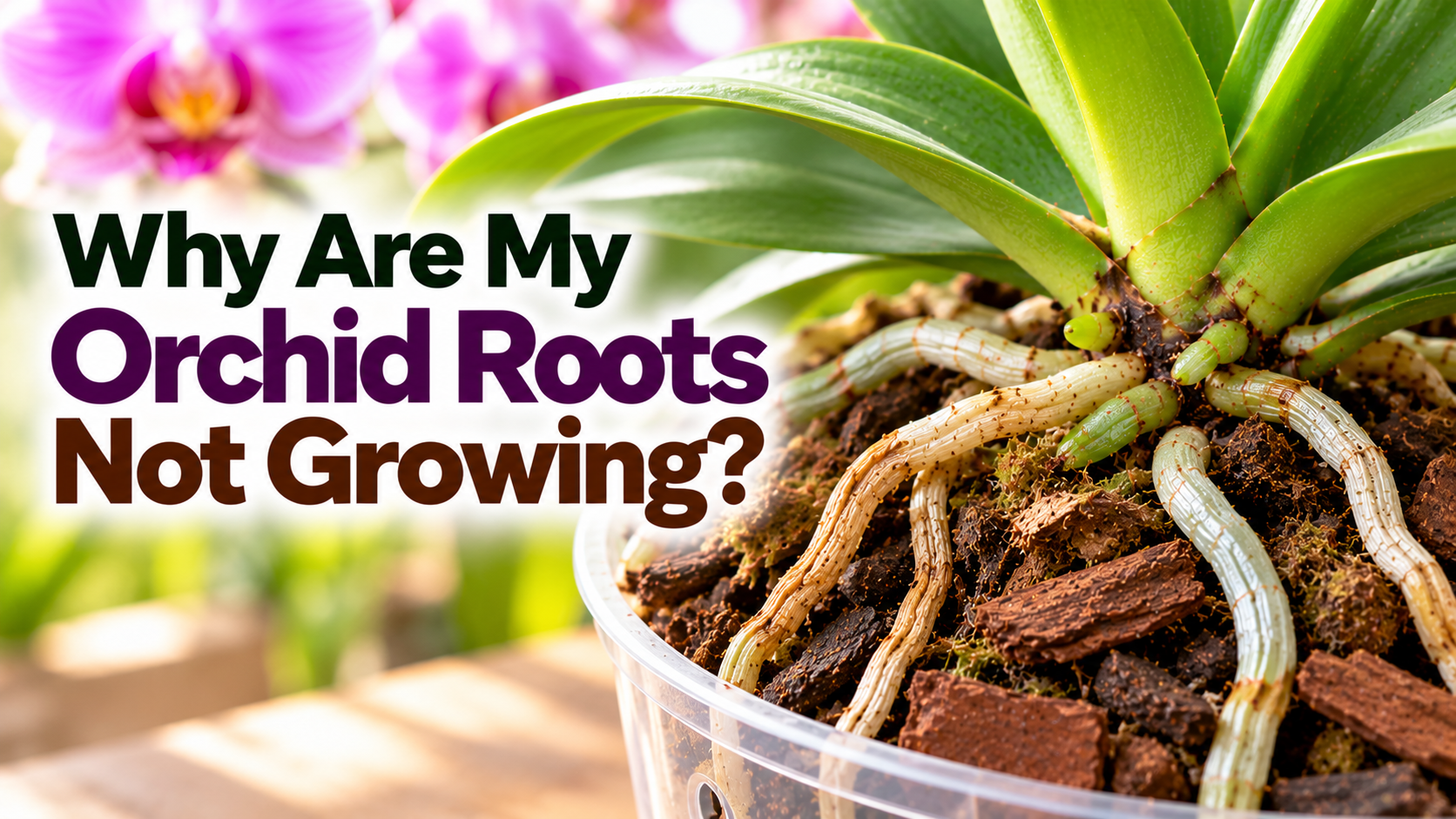
 If your orchid has stopped producing new roots, you may wonder whether the plant is unhealthy or simply going through a period of slow growth. Healthy orchids do not produce new roots continuously throughout the year. Root growth can vary with the species, season, temperature, light, and the plant’s overall condition.
However, if your orchid has not produced new roots for an extended period, especially when its leaves are also deteriorating, it is worth investigating the growing conditions.
Common causes include unsuitable temperatures, insufficient light, damaged roots, poor watering practices, deteriorated potting medium, and excessive fertilizer. The solution depends on identifying which factor is limiting growth.
This guide explains why orchid roots may stop growing, how to recognize the warning signs, and what you can do to support new root development.
For a complete overview of root health, start with our Complete Guide to Orchid Roots.
Is It Normal for Orchid Roots to Stop Growing?
Yes. A pause in visible root growth does not automatically mean that something is wrong.
Orchids have different growth cycles, and some produce roots more actively during particular seasons or stages of development. Temperature changes, reduced daylight, and the plant’s natural growth pattern can all influence root activity.
A healthy orchid may temporarily produce few visible roots while maintaining firm leaves and an otherwise stable appearance.
The situation is more concerning when a lack of new root growth occurs alongside wrinkled leaves, deteriorating roots, poor growth, or a potting medium that remains excessively wet.
Before trying to stimulate new roots, assess the entire plant and its growing environment.
8 Reasons Your Orchid Roots Are Not Growing
1. The Orchid Is in a Natural Resting Period
Some orchids experience seasonal changes in growth. During these periods, visible root development may slow or pause.
Growth patterns vary by species. An orchid that naturally rests during part of the year may not respond well to attempts to force continuous growth.
What to do: Learn the normal growth cycle of your orchid type. If the plant remains healthy and stable, maintain suitable care rather than making drastic changes.
Do not assume that every pause in root growth requires extra watering or fertilizer.
2. Insufficient Light
Light provides the energy orchids need for photosynthesis and new growth. When light levels are too low, an orchid may grow slowly, produce fewer new roots, or struggle to maintain healthy leaves.
Insufficient light may also affect flowering and overall plant vigor.
What to do: Provide the light level appropriate for your orchid type. Many common indoor orchids, including Phalaenopsis, prefer bright indirect light rather than harsh direct sunlight.
Avoid moving a stressed orchid directly into intense sunlight, which can damage its leaves.
3. Temperatures Are Too Cold or Too Hot
Root growth is influenced by temperature. Conditions outside the suitable range for a particular orchid can slow development and reduce the plant’s ability to use water and nutrients effectively.
Cold conditions may slow growth, while excessive heat can increase moisture loss and stress the plant.
What to do: Maintain temperatures appropriate for your orchid species. Avoid sudden temperature fluctuations and prolonged exposure to extreme heat or cold.
The ideal conditions for a cool-growing orchid may differ significantly from those preferred by a warm-growing type.
4. Damaged or Rotting Roots
An orchid cannot produce a healthy root system if the existing roots are continually deteriorating.
Root rot can damage the tissue responsible for absorbing water and nutrients. Severe damage may leave the orchid with too few functioning roots to support normal growth.
Warning signs include:
- Brown or black roots that feel soft or mushy
- Roots that collapse when gently handled
- An unpleasant smell from the potting medium
- Wrinkled leaves despite wet growing media
- A growing medium that stays wet for too long
What to do: Inspect the root system and remove only roots that are clearly dead or rotting. Correct the conditions responsible for the damage before trying to encourage new growth.
Read Orchid Root Rot: Signs, Causes, and How to Save Your Plant.
5. Poor Watering Practices
Both insufficient moisture and excessive moisture can interfere with root development.
If the growing medium dries out too much, developing roots may struggle to receive the moisture they need. If the medium stays saturated, limited airflow and root deterioration may prevent healthy growth.
The problem is not simply how often you water. The orchid type, potting mix, temperature, humidity, and pot size all affect moisture requirements.
What to do: Check the condition of the medium before watering. Provide appropriate moisture for your orchid and allow excess water to drain freely.
If the roots are dry and shriveled, investigate whether they are still alive before increasing watering.
See Why Are My Orchid Roots Dry, Wrinkled, or Shriveled?.
6. The Potting Medium Has Broken Down
Orchid bark and other organic growing materials gradually decompose. As the medium breaks down, it may become compacted and retain water differently from when it was fresh.
This can reduce airflow around the roots and create conditions that interfere with healthy development.
What to do: Inspect the medium for decomposed bark, compacted particles, poor drainage, and unusually slow drying. If the medium has deteriorated, repot the orchid in a suitable fresh mix.
Choose a pot that fits the root system reasonably well and provides adequate drainage.
7. Excessive Fertilizer or Mineral Salt Buildup
Fertilizer provides nutrients, but excessive concentrations can damage roots rather than encourage growth.
Minerals from water and fertilizer salts may accumulate in the potting medium. Damaged root tips can struggle to continue developing, and the plant may show additional signs of stress.
What to do: Review your fertilizer concentration and frequency. Use a suitable dilution for your orchid and avoid applying concentrated fertilizer to dry or damaged roots.
If salt buildup is suspected, and the medium drains properly, thorough watering with suitable low-mineral water may help remove accumulated salts.
Do not increase fertilizer simply because the roots are not growing.
8. The Orchid Is Recovering From Previous Stress
An orchid that has recently been repotted, experienced root rot, lost many roots, or endured unsuitable growing conditions may need time to stabilize.
The plant may initially focus on maintaining its remaining healthy tissue before producing visible new roots.
What to do: Preserve the functioning roots, provide stable growing conditions, and avoid repeated disturbance. Do not keep removing the orchid from its pot to check whether new roots have appeared.
If substantial root damage occurred, follow a careful recovery plan rather than trying several treatments at once.
For more detailed advice, read How to Grow New Roots on an Orchid With Root Damage.
How to Tell Whether Your Orchid Needs Help
A lack of new roots means different things depending on the condition of the rest of the plant.
| What you observe | Possible explanation | Recommended action |
|---|---|---|
| No new roots, but firm leaves and healthy existing roots | Natural growth pause or seasonal change | Continue suitable care and monitor |
| No new roots and very slow overall growth | Insufficient light or unsuitable temperature | Review growing conditions |
| Wrinkled leaves and dry, shriveled roots | Dehydration or root damage | Assess root condition and moisture |
| Wrinkled leaves while the medium remains wet | Possible root dysfunction or rot | Inspect roots and drainage |
| Soft brown roots and decomposed medium | Possible root rot | Remove clearly damaged tissue and repot if necessary |
| Damaged root tips after heavy fertilizing | Possible fertilizer salt injury | Review fertilizer use and mineral buildup |
These clues are not definitive diagnoses. Several factors can affect root growth simultaneously, so consider the entire growing environment before making changes.
How to Encourage New Orchid Root Growth
Once you have identified and corrected the likely cause, focus on creating conditions that support the orchid’s natural growth.
Step 1: Preserve Healthy Existing Roots
Do not cut roots simply because they are brown, yellow, or not actively growing.
Healthy roots can remain functional even when their color varies. Removing them unnecessarily reduces the plant’s ability to absorb water and nutrients.
Cut only roots that are clearly dead or rotting.
For help identifying them, read Should You Cut Dead Orchid Roots? How to Identify Them.
Step 2: Provide Appropriate Light
Give the orchid enough light for healthy growth without exposing it to damaging direct sunlight.
If the plant has been kept in a dark location, adjust light levels gradually and observe how it responds.
Step 3: Maintain Suitable Temperatures
Provide temperatures appropriate for your orchid species. Stable conditions can help reduce stress and support normal growth cycles.
Do not assume that all orchids require the same temperature range.
Step 4: Improve the Root Environment
Use a suitable potting medium and a container with adequate drainage. If the medium has deteriorated, repotting may be necessary.
Avoid choosing an excessively large pot, which may contain more wet medium than the root system can use.
Step 5: Adjust Watering
Water according to the orchid type, growing medium, and environmental conditions.
The goal is to maintain appropriate moisture while allowing sufficient airflow around the roots. Avoid both prolonged saturation and excessive drying.
Step 6: Use Fertilizer Carefully
If the orchid is healthy enough to resume active growth, an appropriate fertilizer routine may support development. However, fertilizer cannot compensate for poor light, unsuitable temperatures, or damaged roots.
Follow the product’s dilution instructions and avoid excessive concentrations.
Step 7: Give the Plant Time
Root growth may not become visible immediately after you correct the growing conditions.
Avoid repeatedly repotting, changing the medium, or applying new treatments in response to every small change. Stable care allows you to assess whether the plant is improving.
Can You Force an Orchid to Grow New Roots?
There is no reliable method that forces every orchid to produce roots on demand.
Rooting products, special growing setups, and changes in watering may be discussed by orchid growers, but their usefulness depends on the orchid species and condition. They cannot guarantee success when the plant is severely damaged or the underlying growing conditions remain unsuitable.
For most home growers, the sensible approach is to correct the cause of poor growth, preserve healthy tissue, and provide conditions suited to the orchid.
Avoid applying untested mixtures or concentrated products directly to vulnerable root tissue.
How Long Does It Take for Orchid Roots to Grow?
There is no single timeline that applies to every orchid.
Some orchids produce visible root growth during favorable conditions, while others grow more slowly because of their species, season, or recovery from stress.
After root damage, new growth may take weeks or longer to become noticeable.
Rather than judging progress by a fixed deadline, watch for:
- New root tips
- Firm, healthy existing roots
- Stable or improving leaves
- New leaf growth when appropriate for the species
- A gradual return to normal growth
A healthy plant does not need to produce new roots continuously to remain healthy.
Common Mistakes That Prevent Healthy Root Growth
Avoid these common responses when an orchid is not producing new roots.
Watering more frequently without checking the medium. If the roots are damaged and the pot is already wet, extra water can worsen the problem.
Applying more fertilizer. Concentrated fertilizer can injure roots and does not compensate for unsuitable growing conditions.
Cutting roots because of their color. Firm brown or yellow roots may still be alive.
Repotting repeatedly. Frequent disturbance can damage new root tips and add stress.
Changing several conditions at once. Making many changes simultaneously makes it harder to identify what is helping or harming the plant.
Expecting immediate growth. Orchids have different growth cycles, and recovery takes time.
Frequently Asked Questions
Is it normal for an orchid to have no new roots for months?
It can be normal, depending on the orchid species, season, and growth cycle. If the existing roots remain firm and the leaves are stable, a pause may not be a problem. If the plant is deteriorating, investigate its growing conditions and root health.
Should I repot an orchid that is not growing new roots?
Not automatically. Repotting may help when the medium has deteriorated, drainage is poor, or root rot is present. If the medium is suitable and the plant is otherwise healthy, unnecessary repotting may add stress.
Does fertilizer help orchids grow new roots?
Suitable fertilization can support a healthy orchid during active growth, but more fertilizer does not necessarily mean more roots. Excessive concentrations can damage root tissue. Correct light, temperature, moisture, and root health first.
Why are new orchid root tips turning brown?
Brown root tips may result from physical damage, unsuitable moisture, fertilizer salts, or other stress. Inspect the growing environment and the rest of the root system. If the tips are deteriorating, review recent handling and fertilizer use rather than assuming the plant needs more fertilizer.
Can an orchid grow new roots if all its roots are dead?
Recovery may be possible if viable plant tissue remains, but it is more difficult and cannot be guaranteed. The outcome depends on the orchid type and the condition of its crown, stem, and remaining living tissue. Such plants require careful management of moisture and growing conditions.
Final Thoughts
Orchid roots may stop growing because of a natural pause, insufficient light, unsuitable temperatures, watering problems, root damage, or deteriorated potting medium.
The most effective response is to identify the likely cause rather than trying to force new growth with extra water or fertilizer. Preserve healthy roots, correct the growing conditions, and give the orchid time to respond.
If the plant is stable and its existing roots remain healthy, a pause in visible root growth may simply be part of its natural cycle. If the roots are deteriorating or the leaves are declining, investigate the problem before it becomes more severe.
For a broader overview of root health and diagnosis, return to our Complete Guide to Orchid Roots.
Build Your Orchid Care Knowledge
Understanding why orchid roots stop growing can help you avoid unnecessary treatments and make better decisions about watering, repotting, and plant recovery.
The Complete Orchid Care Library combines 2 ebooks and 8 visual guide collections, including diagnostic charts and practical visual references for everyday orchid care.
Explore the collection to strengthen your understanding of orchid symptoms, growing conditions, and root care.