
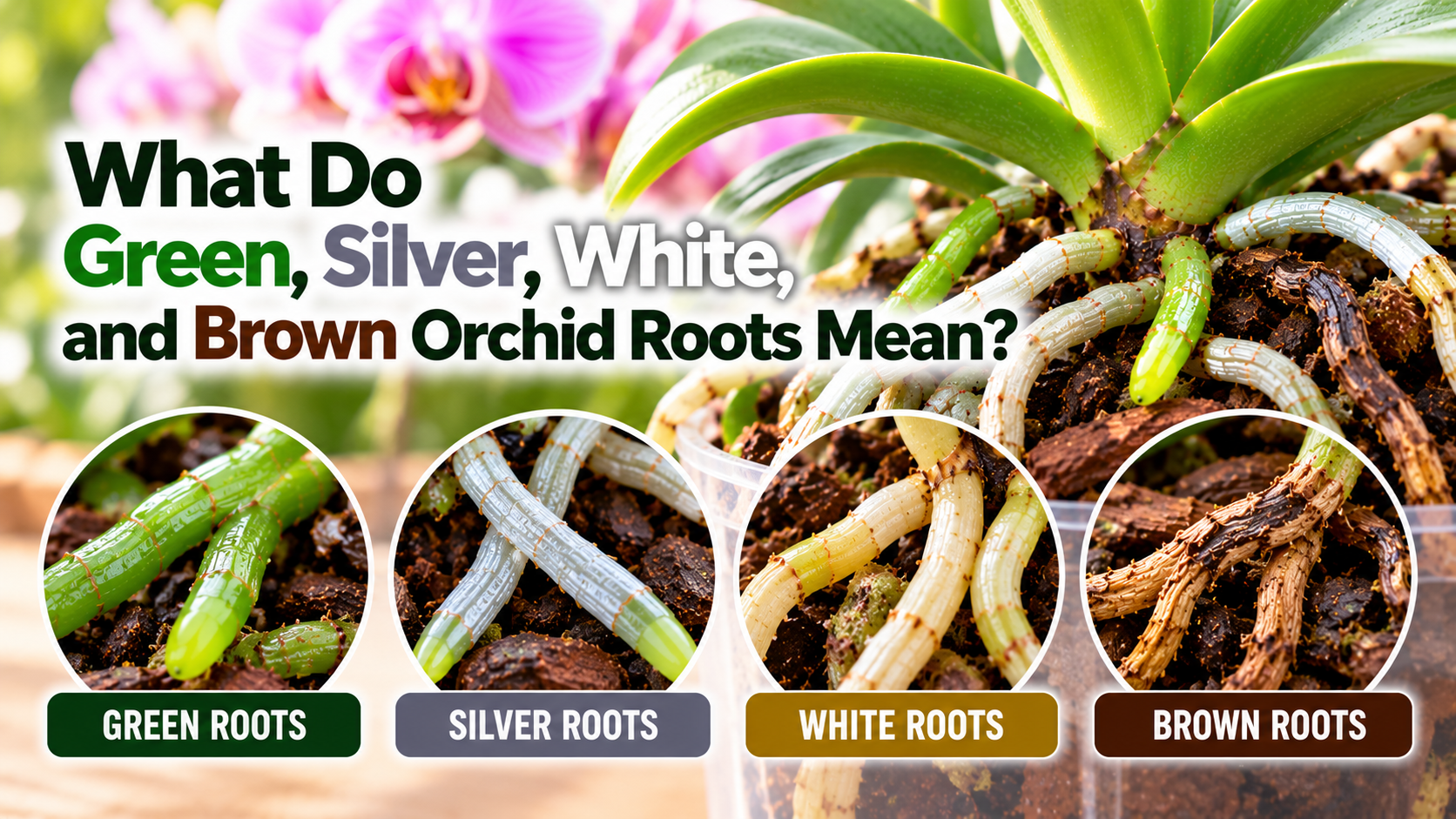
 Orchid roots can display several different colors, including green, silver, white, cream, yellow, and brown. If you are growing orchids in transparent pots, these color changes can be especially noticeable and may leave you wondering whether your plant is healthy.
The good news is that orchid root color alone does not tell you whether a root is healthy or damaged. Many roots change appearance as they become wet or dry, while others look different because they grow inside the potting medium or belong to a different orchid species.
The most reliable way to assess orchid roots is to consider their color, firmness, texture, and growing conditions together.
This guide explains what green, silver, white, and brown orchid roots usually mean, when color changes are normal, and which warning signs deserve attention.
For a complete overview of root health, visit our Complete Guide to Orchid Roots.
Why Do Orchid Roots Have Different Colors?
Orchid roots are adapted to the environments in which different orchid species grow. Their appearance can change depending on moisture, light exposure, age, and the surrounding growing medium.
Many popular orchids, including Phalaenopsis, have roots covered by a specialized outer layer called the velamen. This layer helps the roots absorb and retain moisture from their surroundings.
When the velamen is dry, it can appear silvery or pale. When wet, the root may look greener because the hydrated outer tissue allows more of the underlying green tissue to show through.
However, not every orchid root follows this exact pattern. Some roots naturally appear yellow, cream-colored, tan, or brown. These colors do not automatically indicate a problem.
Before cutting or treating a root, check whether its tissue remains firm and intact.
What Do Green Orchid Roots Mean?
Green roots are commonly associated with healthy, hydrated roots in Phalaenopsis orchids.
When these roots absorb moisture, their appearance may change from silvery to green. This is a useful visual clue when checking whether an orchid has recently been watered.
Are Green Orchid Roots Healthy?
Green roots are often healthy, particularly when they are firm, plump, and structurally intact.
However, green color alone does not guarantee that a root is functioning properly. A damaged root may retain some color even when parts of its tissue are deteriorating.
Check for additional signs of health:
- Firm root tissue
- An intact outer surface
- No mushy or collapsing sections
- Active root tips when the plant is producing new growth
What Should You Do if Your Orchid Roots Are Green?
If the roots are firm and the orchid looks healthy, continue your usual care routine according to the plant’s needs.
Do not water solely because the roots have changed color. Check the moisture level of the growing medium, the pot’s drying rate, and the orchid type before deciding when to water again.
What Do Silver or Silvery-White Orchid Roots Mean?
Silver or silvery-white roots are common in Phalaenopsis orchids when the roots are dry.
As moisture leaves the velamen, the outer surface becomes pale and reflective. This can make a healthy root look silver, grayish-white, or almost white.
Are Silver Orchid Roots Dry?
Often, yes. In many Phalaenopsis orchids, a silvery appearance indicates that the roots have dried after watering.
However, root color should not be used as the only watering signal. The potting medium may still be wet even when some exposed roots look silver.
Should You Water an Orchid When Its Roots Turn Silver?
Silver roots can be one useful clue, but consider the whole root environment.
Check whether the potting medium is approaching the appropriate drying point for your orchid. Consider the temperature, humidity, airflow, and pot size as well.
Avoid watering automatically every time a root turns silver, especially if the medium remains wet.
When Are Silver Roots a Problem?
A silver root is not automatically unhealthy. It becomes more concerning if it is also severely shriveled, brittle, hollow, or deteriorating.
For more guidance, read Why Are My Orchid Roots Dry, Wrinkled, or Shriveled?.
What Do White Orchid Roots Mean?
White orchid roots can be healthy, particularly when they are firm and intact.
Some roots look white or pale because they are dry. Others develop in growing media where they receive little light and naturally remain pale.
A root’s color also varies by species, so white roots should not automatically be treated as a sign of nutrient deficiency or disease.
Are White Orchid Roots Healthy?
They may be. Examine their texture and structure.
A white root that remains firm and intact is generally less concerning than a white root that is hollow, brittle, or collapsing.
Should White Orchid Roots Be Exposed to Light?
No. You do not need to expose every white root to light to make it turn green.
Many orchid roots grow naturally inside bark, moss, or other media where light exposure is limited. These roots can remain pale while functioning normally.
Do not repot an otherwise healthy orchid simply because its roots are white.
What Do Brown Orchid Roots Mean?
Brown roots require closer inspection because the color can have several different causes.
Some brown roots remain firm and healthy. Others are stained by the growing medium, while dark brown or black roots may indicate deterioration when accompanied by soft or mushy tissue.
Can Brown Orchid Roots Be Healthy?
Yes. A brown root may still be alive if it remains firm and structurally intact.
Roots growing through bark or other organic media can become stained. Older roots may also change color without becoming completely nonfunctional.
Do not cut a root simply because it is brown.
When Do Brown Roots Indicate Root Rot?
Brown roots are more concerning when they are accompanied by signs such as:
- Soft or mushy tissue
- A collapsing root structure
- An outer layer that slips away from the central strand
- An unpleasant smell from the potting medium
- Media that remains wet for unusually long periods
These symptoms may indicate root rot, especially when several occur together.
If your orchid has brown roots, read Why Are My Orchid Roots Turning Brown?.
For a complete explanation of root rot and recovery, see Orchid Root Rot: Signs, Causes, and How to Save Your Plant.
What About Yellow or Cream-Colored Orchid Roots?
Although green, silver, white, and brown are common root colors, yellow and cream-colored roots can also be completely normal.
Roots growing inside a pot often receive little light and may appear yellow or cream-colored even when healthy.
The important distinction is between normal coloration and deteriorating tissue.
A yellow root that is firm and intact may be healthy. A root that is yellow and mushy, hollow, or collapsing deserves closer inspection.
Read Why Are My Orchid Roots Turning Yellow? for more details.
Orchid Root Color Guide
Use this table as a quick reference when examining your orchid.
| Root color | What it may mean | What to check |
|---|---|---|
| Green | Often a hydrated root in Phalaenopsis orchids | Firmness and intact tissue |
| Silver or silvery-white | Often a dry root in Phalaenopsis orchids | Moisture in the potting medium |
| White | May be a healthy root with limited light exposure or a dry surface | Texture and structural condition |
| Yellow or cream | May be normal for roots growing inside a pot | Firmness and the condition of the medium |
| Brown | May indicate staining, aging, or root damage | Whether the root is firm or mushy |
| Dark brown or black | May indicate severe deterioration when other symptoms are present | Softness, collapse, odor, and wet media |
These are general guidelines, not universal rules. Root appearance varies between orchid species and growing conditions.
Why Do Orchid Roots Change Color After Watering?
In many Phalaenopsis orchids, healthy roots change from silvery to green as they absorb moisture.
This change occurs because the hydrated outer root layer becomes more transparent, allowing the green tissue beneath it to show through.
As the roots dry, the velamen becomes paler again.
This color change can help you understand moisture conditions, but it is not a perfect measurement of how much water the entire root system needs.
Roots inside a pot may behave differently from exposed aerial roots. The growing medium may also remain wet after exposed roots have become pale.
For this reason, use root color together with the moisture level of the medium and the plant’s overall condition.
How to Tell Healthy Roots From Damaged Roots
When diagnosing root problems, texture is often more useful than color alone.
Healthy Roots
Healthy roots are generally firm and structurally intact. They may be green, silver, white, yellow, or brown depending on their environment.
A root with a healthy growing tip may also indicate active root development.
Dehydrated Roots
Dehydrated roots may appear thin, wrinkled, or shriveled. Some may still be alive, while others may have suffered permanent damage.
Check whether the tissue remains firm and whether the growing medium is drying too quickly.
Rotten Roots
Rotten roots often become soft, mushy, or structurally weak. Their outer tissue may break down, and the potting medium may smell unpleasant.
If rot is present, identify and correct the underlying problem rather than simply increasing watering.
Dead Roots
Dead roots may become hollow, brittle, collapsed, or severely shriveled. However, not every discolored root is dead.
For a detailed identification guide, read Should You Cut Dead Orchid Roots? How to Identify Them.
Should You Cut Orchid Roots Because of Their Color?
No. Color alone is not a sufficient reason to cut an orchid root.
Removing healthy roots can reduce the plant’s ability to absorb water and nutrients. This is particularly risky if the orchid already has a limited root system.
Before cutting, check whether the root is firm, intact, and functional.
- If the root is firm but brown, yellow, or white, preserve it unless there is other evidence of damage.
- If the root is slightly wrinkled, assess moisture and root function before intervening.
- If the root is clearly dead or rotting, remove the damaged tissue with a clean cutting tool.
The goal is to preserve healthy tissue while addressing genuine root damage.
Frequently Asked Questions
Should all healthy Phalaenopsis roots turn green after watering?
Not necessarily. Many healthy roots turn greener when wet, but the degree of color change varies. Roots growing inside a pot may remain yellow or cream-colored because they receive little light.
Why are some roots green while others are silver?
Different roots may have different moisture levels. Exposed roots can dry faster than roots inside the potting medium, so they may display different colors at the same time.
Are white orchid roots a sign of poor nutrition?
Not by themselves. White roots may be healthy and naturally pale. Root color alone cannot establish a nutrient deficiency.
Can brown roots turn green again?
Some roots may look greener when wet if the tissue remains alive. However, dead or severely damaged roots will not regain their function simply by adding water.
Should I water my orchid when all the roots look silver?
Silver roots can indicate that many exposed roots are dry, but check the potting medium before watering. The right timing depends on the orchid type, growing conditions, and moisture remaining inside the pot.
Final Thoughts
Green, silver, white, and brown orchid roots can all occur in healthy plants. The meaning of each color depends on the orchid type, moisture level, light exposure, and condition of the root tissue.
Green roots often indicate hydration in Phalaenopsis orchids, while silver roots commonly appear when they are dry. White and yellow roots may be normal when growing inside a pot, and brown roots may remain healthy if they are firm and intact.
Instead of relying on color alone, inspect the roots’ texture, structure, and growing conditions. This simple habit can help you avoid cutting healthy roots and recognize genuine problems earlier.
For a complete overview of orchid root diagnosis and care, return to our Complete Guide to Orchid Roots.
Understand Your Orchid’s Root Signals
Recognizing root colors is a useful first step, but successful orchid care also requires understanding watering, growing media, root damage, and recovery.
The Complete Orchid Care Library includes 2 ebooks and 8 visual guide collections, featuring diagnostic charts and practical visual references to help you understand common orchid care problems.
Build your orchid care knowledge and make more informed decisions with a collection designed for everyday growers.