
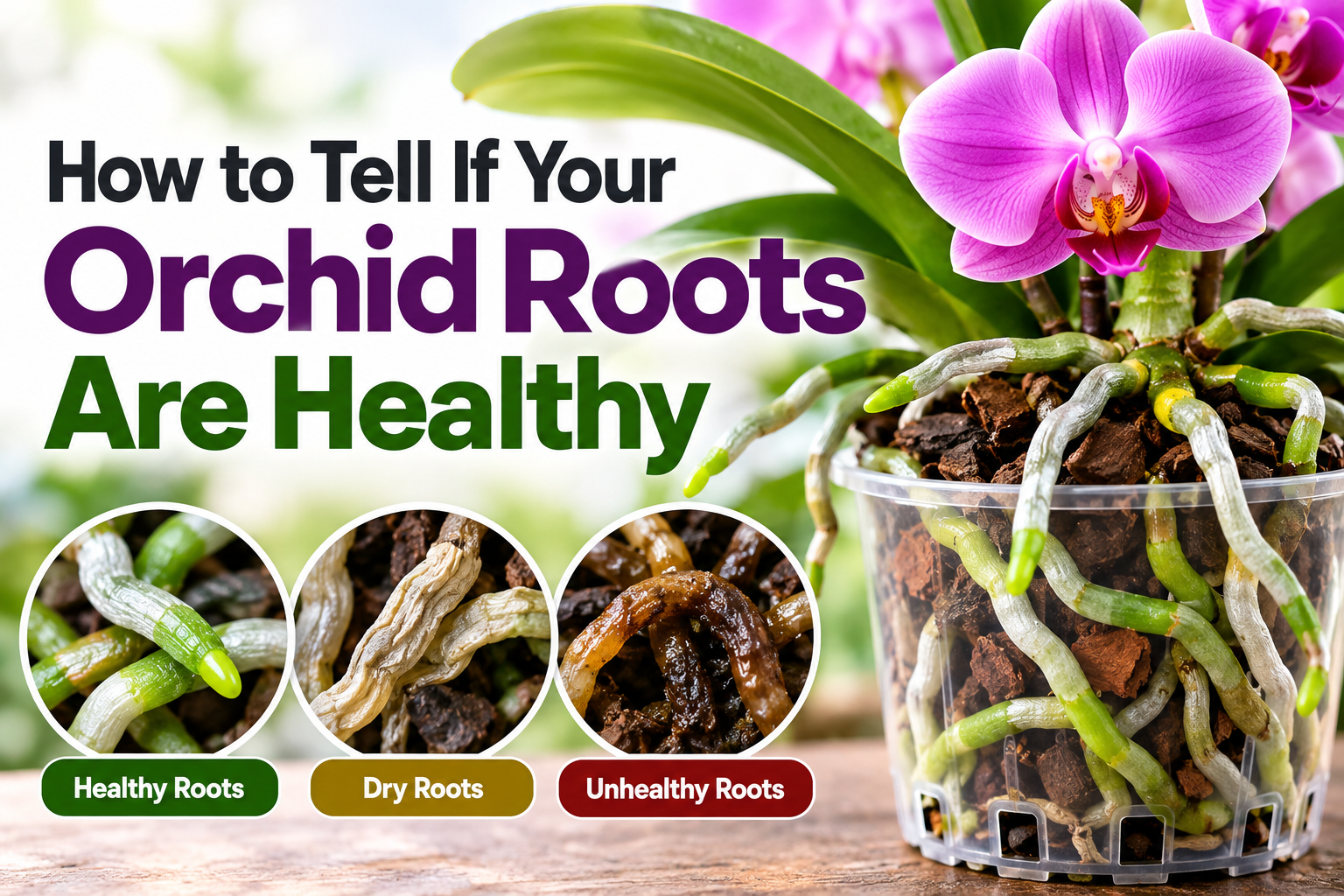
Healthy orchid roots are one of the clearest signs that your plant is getting the support it needs to grow. They absorb water and nutrients, anchor the plant, and help maintain healthy leaves and encourage future blooms.
But identifying healthy orchid roots is not always as simple as looking for green roots. Depending on the orchid species, growing medium, moisture level, and root age, healthy roots can appear green, silver, white, or cream-colored.
The most reliable way to assess orchid roots is to look at their color, firmness, texture, and growth pattern together.
In this guide, you will learn how to recognize healthy orchid roots, distinguish normal color changes from warning signs, and determine when your plant needs attention.
For a broader explanation of root health, diagnosis, and recovery, see our complete guide to orchid roots.
What Do Healthy Orchid Roots Look Like?
Healthy roots generally have a firm structure, an intact outer covering, and no signs of extensive decay. Their appearance varies according to the type of orchid and the conditions in which it grows.
For many common Phalaenopsis orchids, healthy roots have the following characteristics:
- Firm texture: Roots feel solid rather than mushy or hollow.
- Intact outer covering: The root surface is generally smooth or slightly textured, without widespread deterioration.
- Green or silvery color: Roots may appear green when wet and silver or gray when dry.
- Active growth: Growing root tips may appear bright green, reddish, or purple, depending on the plant.
- No unpleasant smell: Healthy roots and fresh potting medium should not produce a strong rotten odor.
Not every healthy orchid root will look identical. Some roots are naturally cream-colored, while older roots may have different shades from younger ones.
The goal is to evaluate the overall condition of the root system rather than judge the plant by one color alone.
1. Check the Color of the Roots
Root color is one of the easiest ways to begin assessing orchid health. However, color should always be interpreted alongside firmness and texture.
Green Roots
Green roots are common in Phalaenopsis orchids, particularly when the roots are moist.
Many orchid roots have a spongy outer layer called the velamen. When this layer absorbs water, it becomes more transparent, allowing the green tissue underneath to show through.
Green roots that remain firm and intact are generally a positive sign. However, green color alone does not guarantee root health.
Silver or Gray Roots
Silver or gray roots are also normal in many Phalaenopsis orchids.
When the velamen dries, it becomes less transparent and often looks silvery or gray. After watering, healthy roots may gradually turn green again.
Silver roots do not automatically mean that your orchid is dehydrated or needs immediate watering. Consider the condition of the potting medium, the weight of the pot, and the moisture level throughout the root zone.
White or Cream-Colored Roots
White or cream-colored roots can be healthy, especially when they grow inside an opaque pot or are covered by potting medium.
Some roots naturally appear pale because they receive little light. Root color also varies among orchid species.
A firm, intact white root is not necessarily a problem.
Brown or Black Roots
Brown or black roots deserve closer inspection, but their color alone does not establish that they are dead.
Some roots become stained by bark, minerals, or other growing-medium materials. Older root sections can also darken naturally.
A root is more concerning when it is dark and mushy, has a deteriorating outer layer, smells rotten, or collapses when gently handled.
If you find roots that are brown and deteriorating, read our focused guide to orchid root rot, its signs, causes, and treatment.
2. Feel the Root Texture
Firmness is one of the most useful indicators of root condition.
When assessing an exposed root, handle it gently. There is no need to squeeze or bend it repeatedly, especially if the plant is delicate.
Firm Roots
Healthy roots usually feel firm and retain their shape when gently touched.
Their outer covering should remain reasonably intact. Depending on the species and growing conditions, roots may feel slightly flexible without being soft or collapsing.
Firmness is particularly helpful when color is ambiguous. A pale or brown root may still be functional if its structure remains intact.
Mushy Roots
Mushy roots are a common warning sign, especially when accompanied by dark discoloration and a foul smell.
Root tissue may break down when it remains excessively wet and poorly aerated. Damaged roots can no longer perform their normal functions effectively.
If several roots are mushy, inspect the potting medium and drainage conditions. Do not automatically remove every dark root; identify the sections that are genuinely deteriorated.
Dry, Hollow, or Papery Roots
Roots that have become severely dehydrated or died may feel brittle, hollow, papery, or collapsed.
Some dry root tips can occur without indicating a major problem, but widespread shriveling deserves attention.
Before changing your watering routine, check whether the potting medium dries too quickly, whether the roots are still functional, and whether the plant has other signs of dehydration.
For more detailed help identifying these symptoms, read why orchid roots become dry, wrinkled, or shriveled.
3. Look for Healthy Root Tips and New Growth
New root growth is an encouraging sign that an orchid is actively developing its root system.
In many Phalaenopsis orchids, actively growing roots have smooth, rounded tips that may appear bright green, reddish, or purple. The color depends on the cultivar and its growing conditions.
As roots lengthen, their tips remain distinct from the older sections behind them.
Look for these signs:
- New roots emerging near the base of the plant.
- Root tips that remain firm and intact.
- Gradual root extension over time.
- New roots developing alongside healthy leaves or other signs of growth.
An orchid does not need to produce new roots continuously throughout the year. Root growth varies with species, season, temperature, light, and the plant’s growth cycle.
A lack of visible new roots for a short period does not necessarily mean something is wrong.
4. Understand the Difference Between Aerial Roots and Roots Inside the Pot
Many orchids, especially Phalaenopsis, produce aerial roots that grow above the potting medium.
These roots are a normal part of the plant’s growth pattern. In nature, many orchids grow attached to trees rather than rooted in ordinary soil. Their roots are adapted to absorb moisture from the surrounding environment while remaining exposed to air.
Healthy aerial roots may appear silvery, green, or cream-colored. They can grow sideways, upward, or outward from the plant.
Do not cut aerial roots simply because they extend beyond the pot. If they are firm and intact, they may still contribute to water absorption and anchorage.
Aerial roots can look different from roots inside the pot because they experience different levels of light, moisture, and airflow.
5. Check the Potting Medium and Drainage
Healthy roots depend on suitable growing conditions. Even roots that currently look healthy can deteriorate if the environment around them becomes unsuitable.
For many commonly cultivated epiphytic orchids, the growing medium should provide both moisture and adequate airflow.
Inspect the following:
Drainage: Water should be able to leave the pot freely. Containers without suitable drainage can keep the root zone excessively wet.
Potting medium: Bark and other orchid-growing materials gradually break down. Decomposed medium may retain too much water or restrict airflow.
Moisture: The medium should not remain constantly saturated. However, the correct watering frequency depends on the orchid species, pot, medium, temperature, and humidity.
Pot condition: A pot that is much too large for the root system may take longer to dry. Choose a container appropriate for the plant’s roots and growing requirements.
Avoid watering according to a rigid calendar alone. Check the actual condition of the plant and its growing medium before deciding whether it needs water.
6. Are All Brown or Yellow Roots Unhealthy?
No. Color changes are not always evidence of root damage.
A root may become discolored because of mineral deposits, contact with growing materials, aging, or environmental exposure. Some healthy roots are naturally pale or cream-colored.
Yellow roots may also be healthy, particularly when they have grown in darkness.
Instead of removing a root based only on color, examine its structure.
| Root appearance | What it may indicate | What to check |
|---|---|---|
| Green and firm | Often healthy and moist | Intact surface and continued growth |
| Silver and firm | Often a normal dry-root appearance | Moisture in the growing medium |
| White or cream and firm | May be healthy roots growing in darkness | Texture and overall condition |
| Brown but firm | May be stained, aged, or discolored | Whether the root remains intact |
| Dark and mushy | Possible root rot or tissue breakdown | Smell, drainage, and surrounding medium |
| Dry, hollow, and brittle | Possible dead or severely dehydrated root | Whether the damage is localized or widespread |
| Yellow and firm | May be normal, especially in darkness | Whether other symptoms are present |
These descriptions are general guidelines rather than a definitive diagnosis. Different orchid genera can have different root characteristics.
For another common color concern, see why orchid roots turn yellow.
7. Look at the Whole Plant, Not Just the Roots
Roots are important, but their appearance should be considered alongside the condition of the leaves, stems, and growing medium.
An orchid with a healthy root system may have firm leaves and show gradual growth. However, some orchids naturally have older leaves that yellow and fall as part of normal development.
Conversely, an orchid with damaged roots may develop symptoms such as limp leaves, slow growth, or difficulty maintaining hydration.
These symptoms are not exclusive to root problems. They can also result from inappropriate watering, temperature stress, pests, or other environmental factors.
The most useful assessment combines root appearance, plant growth, moisture conditions, and changes over time.
8. When Should You Inspect the Roots More Closely?
You do not need to remove an orchid from its pot every time you want to check its roots.
If the plant is growing in a transparent pot, you can often inspect the visible roots without disturbing them.
A closer inspection may be appropriate when:
- Several roots appear mushy or deteriorated.
- The potting medium has broken down significantly.
- There is a persistent unpleasant smell from the root zone.
- The plant continues to decline despite appropriate care.
- The pot no longer drains properly.
When inspection is necessary, remove the plant carefully and examine the root system without pulling or tearing healthy roots.
If repotting is needed, use a suitable orchid-growing medium and a container with adequate drainage. Remove only roots that are clearly dead or severely deteriorated, using clean cutting tools.
For a detailed explanation of when removal is appropriate, see should you cut dead orchid roots?.
Frequently Asked Questions
Should healthy orchid roots always be green?
No. Many Phalaenopsis roots turn green when wet and silver or gray when dry. Other roots may appear white or cream-colored, especially when grown in darkness. Firmness and overall condition are more useful than color alone.
Are silver orchid roots a sign that I need to water?
Not necessarily. Silver roots often indicate that the outer velamen has dried. Before watering, check the growing medium and the plant’s specific moisture requirements.
Can white orchid roots be healthy?
Yes. White or cream-colored roots can be healthy, particularly when they grow inside opaque pots or beneath the growing medium. Check whether they are firm and intact.
Should I cut brown orchid roots?
Not automatically. Brown roots may be stained, aged, or otherwise discolored while remaining structurally intact. Remove roots only when there is good evidence that they are dead or severely deteriorated.
How often should I check my orchid roots?
Check visible roots during your normal care routine, especially when watering. A full root inspection is generally unnecessary unless you notice warning signs, problems with drainage, deteriorating medium, or declining plant health.
Can an orchid recover if many roots are damaged?
Recovery may be possible if the plant retains viable tissue and receives appropriate care. Remove clearly deteriorated roots when necessary, correct the underlying growing conditions, and avoid keeping the remaining root system constantly wet. Recovery time varies with the species and the extent of the damage.
Final Thoughts
Healthy orchid roots are generally firm, intact, and capable of supporting the plant’s growth. Their color can range from green and silver to white or cream, depending on moisture, light exposure, and the orchid species.
The most reliable approach is to evaluate color, firmness, root tips, growing conditions, and the overall health of the plant together.
Avoid cutting roots simply because they look different from what you expected. When you identify a genuine problem, focus on correcting its cause rather than treating the appearance alone.
For a broader overview of root health, discoloration, rot, and recovery, continue with The Complete Guide to Orchid Roots: How to Identify Healthy Roots and Fix Common Problems.
Want to grow healthier orchids and solve common orchid care problems with greater confidence?
The Complete Orchid Care Library brings together 2 ebooks and 8 visual guide collections in one practical resource.
Explore diagnostic charts, care posters, decision guides, tutorials, and other visual references designed to help you understand orchid care and make more informed decisions.
Ready to become a more confident orchid grower?